
There are some easy tips and techniques through which pronouncing Arabic letters becomes an easy task to do. In this article, will do the same. At the end of this article, you will be able to pronounce the letter س {sīn} easily with the different harakat (Vowel movements):
Fat̊ḥa فَتْحَة َ
Kasrah كسرة ِ
Dammah ضمة ُ
Jazm / Sokoun جزم ْ
Shadda شدة ّ
Here it is important to understand some parts of the mouth through which we will be pronouncing the letter س {sīn}
- ثنايا عليا (tẖanāyā ʿul̊yā): The front four teeth are called ثنايا (tẖanāyā), the two upper teeth are calledثنايا عليا (tẖanāyā ʿul̊yā).
- ثنايا سفلى (tẖanāyā suf̊la): The front lower two teeth are called Thanaya Sufla.
- The tip of our tongue.
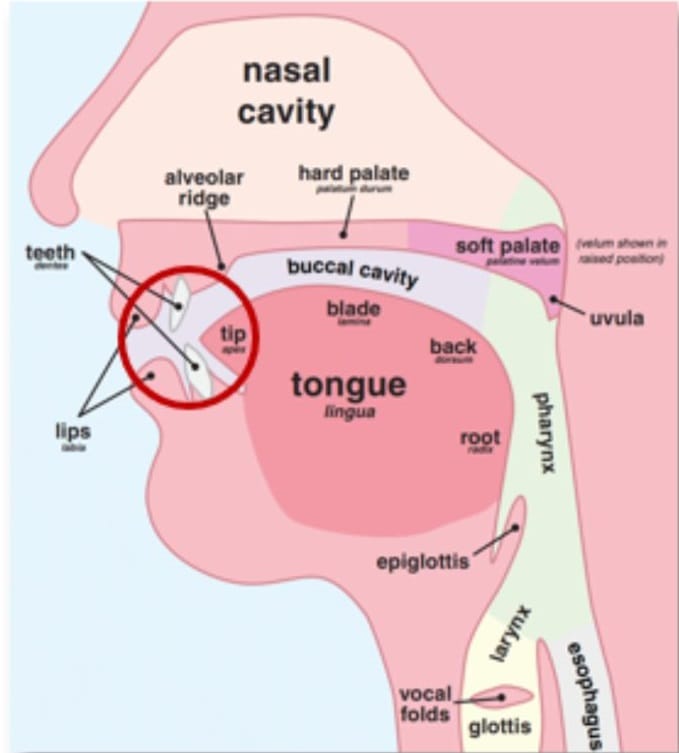
Now, let’s pronounce س {sīn}: Touch the tip of your tongue at the edge of the upper two teeth (tẖanāyā ʿul̊yā) along with the edge of the lower front teeth (tẖanāyā suf̊la) and say س {sīn}. Practice this sound again and again.
Practice س {sīn} with vowel movements.
- Fat̊ḥa فتحة: It is a small diagonal line on the top of the letter and sounds as ‘AA’:
سَ = SA, Read as; S fatah SA
- Kasrah كسرة: It is a small diagonal line below a letter and sounds like ‘EE’:
سِ = See, Read as; S kasrah See
- Dammah ضمة: It is a small comma like symbol on the top of the letter and sounds like ‘UU’:
سُ = SU, Read as; S dammah SU
- Jazm / Sokoun جزم: Jazm or “sokoun”, happens when a letter with Jazm is called Sakin. It is a small round symbol above the letter. It means that this letter is joint with the letter before it:
سْ = S sakin, أَسْ = Alif fatha + S sakin = ạå̉s̊
- Shadda شدة: When a letter having symbol ّ , we call it Mushadad. It is pronounced by saying the letter twice with one movement of the tongue. It is read by joining two letters and also read with harakat.
أَسَّ= ảssã أَسِّ = ảssĩ – أَسُّ = å̉ssũ
To learn more about the Arabic Harakat, here you can find the easiest way to practice Tashkeel:
Practice the letter س {sīn} by saying these words:
سَلْطَعُون (sal̊ṭaʿūn – Crab)
سَلَطَةٌ (salaṭaa – Salad)
سُمَّانْ (sumãạn̊ – Quail)
سِحَاب (siḥāb – Clouds)
سَمَكَةٌ (samaka – Fish)
سُكَّرٌ (sukãr – Sugar)
Listen to some Arabic Words starting with the letter س {sīn}
Learn how to write the letter س {sīn}
The Difference Between the Sounds س (sīn), ث (thāʾ), and ص (ṣād)
The Arabic letters ث (thāʾ), س (sīn), and ص (ṣād) may all seem to produce a similar sound to the English letter “S.” However, each of these letters has its own unique pronunciation. Understanding how to correctly articulate them is essential for accurate and fluent Arabic pronunciation. Let’s explore the difference step by step.
1. The sound of ث (thāʾ)
To pronounce ث (thāʾ) correctly, place the tip of your tongue lightly between your upper front teeth (الثنايا العليا – al-thanāyā al-ʿulyā). When you release the air, it should pass gently over the tongue, creating a soft sound similar to the English “th” in words like think or thank.
In other words, ث is a soft “th” sound, not a regular “s” sound.
2. The sound of س (sīn)
Next, for the letter س (sīn), position the edge of your tongue close to both your upper and lower front teeth (الثنايا العليا والثنايا السفلى – al-thanāyā al-ʿulyā wa al-thanāyā al-suflā). Make sure the tongue does not touch the teeth completely—leave a narrow passage for the air to flow smoothly.
This produces a clear, light “s” sound, similar to the English “s” in sun or simple.
3. The sound of ص (ṣād)
Finally, the letter ص (ṣād) is pronounced in a similar way to س (sīn), but with an important difference: it is a heavier or “thicker” sound.
To achieve this, raise the back of your tongue slightly toward the roof of your mouth while keeping the front of the tongue near the teeth, just like when pronouncing س. This gives ص a deeper, more emphatic quality, often referred to as a “heavy S” sound.
In Arabic phonetics, this quality is called tafkheem (تفخيم), which means “making the sound thick or full.”
Summary
- ث (thāʾ) → Tip of the tongue touches the upper front teeth; sounds like “th” in think.
- س (sīn) → Edge of the tongue near upper and lower front teeth; sounds like English “s”.
- ص (ṣād) → Same as س, but pronounced heavier and deeper.
To learn how we can write the Arabic letters, check out this article:


This website was… how do I say it? Relevant!! Finally I have found something which helped me.
Appreciate it!