
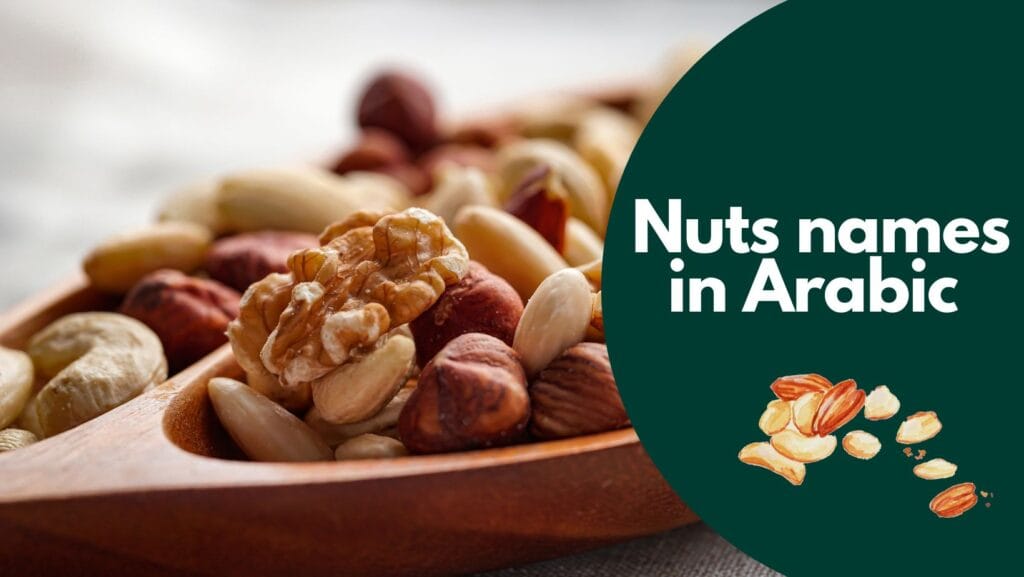
Learning the names of nuts in Arabic is useful for shopping, cooking, and improving your language skills. Our interactive course presentation introduces you to various nut names with images and audio pronunciations by native speakers.
Click on the audio icons to listen and repeat, and practice using these terms to describe nuts in Arabic. Share in the comments your favorite nuts and how this course has helped you!
Transliterations and examples:
- لوز (Lauz) – Almond
- جوز (Jawz) – Walnut
- فستق (Fustuq) – Pistachio
- بندق (Bunduq) – Hazelnut
- كاجو (Kājū) – Cashew
- فول سوداني (Fūl Sūdānī) – Peanut
- صنوبر (Ṣanawbar) – Pine nut
- عين جمل (ʿAyn Jaml) – Pecan
- مكاديميا (Makādīmiyā) – Macadamia
- جوز الهند (Jawz al-Hind) – Coconut
Why Learning Nut Names in Arabic is Useful
Mastering practical vocabulary is one of the fastest ways to start speaking a new language. Nuts are often part of daily conversations, especially when shopping, cooking, or sharing food with friends and family. Knowing their names also helps you:
- Understand Arabic menus and recipes
- Communicate with locals in markets and cafés
- Participate in cultural events and social gatherings
By learning this vocabulary, you gain confidence and start building phrases that are immediately useful.
Common Nut Names in Arabic
Here is a beginner-friendly table of essential nuts. Each includes the Arabic script, transliteration, English translation, and a short cultural note.
| Arabic | Transliteration | English | Cultural Notes |
|---|---|---|---|
| جوز | jawz | Walnut | Used in salads, desserts, and traditional dishes. |
| لوز | loz | Almond | Often found in sweets like baklava and ma’amoul. |
| فستق | fustuq | Pistachio | Popular in desserts and snacks; symbol of hospitality. |
| بندق | bunduq | Hazelnut | Used in chocolates and pastries. |
| كاجو | kaju | Cashew | Common snack and ingredient in dishes. |
| فول سوداني | fūl sūdānī | Peanut | Roasted or salted; widely consumed as a snack. |
| صنوبر | sanawbar | Pine Nut | Used in dishes like kibbeh and pilaf. |
| عين الجمل | ʿayn al-jawz | Walnut (literally “eye of the walnut”) | Appears in idioms and proverbs. |
Using Nut Names in Everyday Sentences
Learning words is more effective when you apply them in real sentences. Here are practical examples for beginners.
Asking About Nuts
| Arabic | Transliteration | English | Cultural Notes |
|---|---|---|---|
| هل لديك لوز؟ | hal ladayka loz? | Do you have almonds? | Useful when shopping in markets or grocery stores. |
| أريد بعض الفستق | urid baʿḍ al-fustuq | I want some pistachios | Polite phrase for buying nuts. |
| ما هي المكسرات المتوفرة؟ | ma hiya al-mukassarat al-mutawaffira? | What nuts are available? | Common question in stores or cafés. |
Talking About Preferences
| Arabic | Transliteration | English | Cultural Notes |
|---|---|---|---|
| أحب الجوز | uḥibbu al-jawz | I love walnuts | Casual conversation among friends. |
| لوزي المفضل هو اللوز | lozi al-mufaddal huwa al-loz | My favorite nut is almond | Talking about personal preferences. |
| نحب الفستق في الحلويات | nuḥibbu al-fustuq fi al-ḥalawiyat | We love pistachios in sweets | Common when discussing desserts. |
Offering Nuts to Friends or Guests
| Arabic | Transliteration | English | Cultural Notes |
|---|---|---|---|
| تفضل بعض الكاجو | tafaddal baʿḍ al-kaju | Please take some cashews | Polite offer to friends or guests. |
| هل تريد بندق؟ | hal turid bunduq? | Do you want hazelnuts? | Casual, friendly offering. |
| يمكنني أن أعطيك بعض الفول السوداني | yumkinuni an uʿṭīk baʿḍ al-fūl sūdānī | I can give you some peanuts | Shows generosity; important in Arab culture. |
Mini Dialogues for Practicing Nut Vocabulary
Using mini dialogues helps you practice pronunciation, sentence flow, and cultural context.
Dialogue 1: At the Market
أحمد: هل لديك فستق؟
حليمة: نعم، لدينا فستق طازج.
أحمد: أريد نصف كيلو من فضلك.
Transliteration:
Ahmed: hal ladayka fustuq?
Halima: naʿam, ladayna fustuq ṭāzaj.
Ahmed: urid niṣf kilo min faḍlik.
English Translation:
Ahmed: Do you have pistachios?
Halima: Yes, we have fresh pistachios.
Ahmed: I want half a kilo, please.
Dialogue 2: Sharing Nuts with Friends
سارة: تفضل بعض اللوز؟
علي: شكراً، أحب اللوز كثيراً.
Transliteration:
Sara: tafaddal baʿḍ al-loz.
Ali: shukran, uḥibbu al-loz kathīran.
English Translation:
Sara: Please take some almonds.
Ali: Thank you, I love almonds a lot.
Dialogue 3: Talking About Favorites
سلوى: ما هي المكسرات المفضلة لديك؟
حسن: أحب الفستق والجوز كثيراً.
Transliteration:
Salwa: ma hiya al-mukassarat al-mufaddala ladayka?
Hassan: uḥibbu al-fustuq wa al-jawz kathīran.
English Translation:
Lina: What is your favorite nut?
Hassan: I love pistachios and walnuts a lot.
Fun Cultural Notes About Nuts in Arabic
- Pistachios and almonds are key ingredients in desserts such as baklava, ma’amoul, and halva.
- Pine nuts are expensive and considered a luxurious ingredient, often used in special dishes served at weddings and festivals.
- Sharing nuts symbolizes generosity and hospitality, especially during Ramadan and Eid celebrations.
- Certain nuts, like walnuts (ʿayn al-jawz), appear in Arabic proverbs, representing wisdom or strength.
Quick Reference Table for All Examples
| Arabic | Transliteration | English | Notes |
|---|---|---|---|
| جوز | jawz | Walnut | Salads, desserts |
| لوز | loz | Almond | Sweets, baking |
| فستق | fustuq | Pistachio | Snacks, desserts |
| بندق | bunduq | Hazelnut | Chocolates, pastries |
| كاجو | kaju | Cashew | Snack, cooking |
| فول سوداني | fūl sūdānī | Peanut | Roasted snack |
| صنوبر | sanawbar | Pine Nut | Traditional dishes |
| عين الجمل | ʿayn al-jawz | Walnut (literally “eye of the walnut”) | Proverbs, idioms |
Beginner Practice Quiz
Test your knowledge with this simple quiz:
- What is the Arabic word for pistachio?
- How do you say “I love walnuts” in Arabic?
- Translate this sentence: “Do you have almonds?”
- Which nut is called bunduq in Arabic?
- Name a cultural event where sharing nuts is common.
Answers:
- فستق (fustuq)
- أحب الجوز (uḥibbu al-jawz)
- هل لديك لوز؟ (hal ladayka loz?)
- Hazelnut
- Ramadan or Eid
Tips to Remember Nut Vocabulary
- Group nuts by type – e.g., tree nuts vs. legumes (peanuts).
- Use real-life practice – buy nuts in a local Middle Eastern store and say their names aloud.
- Pair words with images – visual memory helps retention.
- Practice mini dialogues – repeating simple conversations improves fluency.
- Connect words to culture – linking nuts to dishes and traditions makes them easier to remember.
Conclusion
Learning nut names in Arabic is a practical, enjoyable way for beginners to start using the language in real life. By combining vocabulary, transliteration, example sentences, mini-dialogues, and cultural notes, you can speak about food with confidence. Start practicing today, and soon discussing snacks, desserts, and recipes in Arabic will feel natural.

If you want to find out the transliteration of any Arabic word, you can use our Arabic Transliteration tool. Type or paste your Arabic text to get the Latin Transliterated script, and hear it by our Arabic text to speech online tool. This Arabic transliteration tool has been developed to help English speakers get the Transliteration script of Arabic speech with the highest accuracy.










Thanks for sharing. I read many of your blog posts, cool, your blog is very good.